Get a better experience by installing our free app!
Not now
Install
Get a better experience by installing our web app!
Hide
How to do it?
In Safari, tap on the menu bar. Scroll down the list of options, then tap Add to Home Screen.(If you don’t see Add to Home Screen, you can add it. Scroll down to the bottom of the list, tap Edit Actions, then tap Add to Home Screen.)
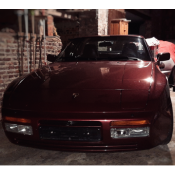
Coming down on my high of getting the car through the DMV inspection.
944-panne-2.jpg (1.94 MiB) Viewed 1650 times
Specs:
- 1986 944 Turbo
- European model
- Completely stock
Context:
- Driving hard on freeway
- Boost was +- 2 on stock gauge
- All of a sudden a stumble, but not extreme
- No throttle response after
- Sparks visible in rearview mirror
-> Got myself into the emergency lane
Diagnosis by the road:
- Glowing red hot pipe under the car (can't remember exactly where, but in vicinity of wastegate)
- Car doesn't start again (but I didn't try to crank it long)
- No leaks visible of any kind
- Burning plastic smell
=> Over the past few days, I was in doubt whether the wastegate is actually working to let off excess boost. Boost gauge behavior normal. I can hear and feel turbo kick in at 3K RPM. But it holds 2 bar of boost until red line (didn't try any further) while not hearing audible psssh sound.
=> First thought: boost/wastegate/turbo related
=> How does glowing pipe fit in this? What about my power loss?
=> Edit: also worth mentioning it passed smog in Belgium with 1.75 % CO (4.5% is the limit, yes it is %)
Today, I pulled the J-boot to inspect the turbo. I found it spins freely and that there is no play. So that's good. I did however also find an oily sludge in the turbo inlet, the J boot, the throttle body, and the intercooler pipe to the throttle body. It also smelled of gas (at least the intercooler pipe did).
turbo.jpg (211.63 KiB) Viewed 1632 times
turbo2.jpg (169.72 KiB) Viewed 1632 times
j-boot1.jpg (116.66 KiB) Viewed 1632 times
throttle-body-sludge.jpg (128.24 KiB) Viewed 1632 times
intercoolerpipe-sludge.jpg (167.24 KiB) Viewed 1632 times
intercoolerpipe-sludge2.jpg (84.21 KiB) Viewed 1632 times
Oil in the jboot/intake is pretty common on these cars. Can't really tell from the pictures, but do you have oil or a sludge or oil and coolant? Oil is ok, a mixed sludge isn't. How does the coolant look in the tank? Clean, or oily? Did any coolant spit out the overflow? How does the underside of the oil cap look? Does it have lots of mocha-sludge on it? These would all be signs of a blown head gasket, which is a possibility of you over boosted. A bone stock car does not generally get to 2+ on the gauge. Normally, the DME/KLR will go into overboots protection mode if you boost too much, but that feels more like a complete and sudden loss of power. Is that what you felt? Was there a lot of backfiring that might explain the 'sparks' out the back? Stock cars don't generally heat the turbo/exhaust to the point of glowing red, at least bone-stock cars on the street. Is your catalytic converter original? Wonder if it's melted and plugging up the exhaust? Or maybe a collapsed downpipes. Have you tried starting the car since? Sorry this happened, but these cars are often 2 steps forward, 1 step back, as you get them sorted out...
Tom wrote: Mon May 06, 2024 8:55 pm
Oil in the jboot/intake is pretty common on these cars. Can't really tell from the pictures, but do you have oil or a sludge or oil and coolant? Oil is ok, a mixed sludge isn't. How does the coolant look in the tank? Clean, or oily? Did any coolant spit out the overflow? How does the underside of the oil cap look? Does it have lots of mocha-sludge on it? These would all be signs of a blown head gasket, which is a possibility of you over boosted. A bone stock car does not generally get to 2+ on the gauge. Normally, the DME/KLR will go into overboots protection mode if you boost too much, but that feels more like a complete and sudden loss of power. Is that what you felt? Was there a lot of backfiring that might explain the 'sparks' out the back? Stock cars don't generally heat the turbo/exhaust to the point of glowing red, at least bone-stock cars on the street. Is your catalytic converter original? Wonder if it's melted and plugging up the exhaust? Or maybe a collapsed downpipes. Have you tried starting the car since? Sorry this happened, but these cars are often 2 steps forward, 1 step back, as you get them sorted out...
Hi Tom, thanks again for your response and help!
On the coolant:
I'm afraid it's more of a sludge. It used to be less and more oily, but since the MOT I drove the car hard a few times (after warming it up) so maybe that's the cause of the increase.
I do have to report that I have been losing a bit of coolant. I however Ithink this is due to the heater core opening after warming up completely. (I had to refill the coolant because of a big leak a week ago, I vented the system twice). Not sure if I still lose coolant after the last refill.
The coolant in the tank looks OK, although there are some particles in the coolant, there is no oil. Coolant did not spit out the overflow. The oil cap looks clean, no sludge in the cap or in the oil refill tube. No bubbles in the coolant tank when idling. No white smoke from tail pipe.
On the stumble:
It was a stumble during a pull, boost was +- 2 on stock gauge (or 1.75 as should be the max I guess, it was near max for sure). Immediately following the stumble, I couldn't accelerate even when flooring it. The speed just dropped off and then I pulled over. I did notice at least 1 backfire during this event.
On the cat:
The catalytic converter is original from 1986. I took the time today to pull the muffler section and separate the cat from the muffler. I shone a flashlight in it, and I believe the cat has indeed failed. The honeygrate seems to have a few holes in it. I'll attach some pictures below.
I haven't restarted the car yet because I first wanted to ensure the turbo and the belts were OK. They all are! Well at least besides the oily sludge issue.
WhatsApp Image 2024-05-07 at 15.48.53.jpeg (133.58 KiB) Viewed 1588 times
WhatsApp Image 2024-05-07 at 15.48.54 (3).jpeg (83.68 KiB) Viewed 1588 times
I want to preface my idea with the disclosure that I have zero experience with turbos!
There are a couple things that you said that stand out to me: the sparks/glowing exhaust and the intake tract smelling like gas.
I may be stretching here, but perhaps there has been a massive overfuelling incident, like one or more stuck open injectors or a failed fuel pressure regulator or damper dumping so much fuel into the engine that it caused such an over rich condition that the engine lost power/bogged down, or (hopefully not) washed down the cylinder walls and scored them up, galling the pistons and rings in the process.
A large amount of the unburned fuel could have also caused a fire in the exhaust, lit by the glowing cat, heating up the whole pipe ahead of the cat causing it to glow ...???
Does the engine turn over by hand? Pull the dipstick, does the oil on it smell strongly of gasoline? What do the plugs look like? Maybe do a fuel pressure test, and pull the vacuum lines on the regulator and damper to see if there are any leaks from the vacuum ports?
icb wrote: Wed May 08, 2024 4:54 am
I want to preface my idea with the disclosure that I have zero experience with turbos!
There are a couple things that you said that stand out to me: the sparks/glowing exhaust and the intake tract smelling like gas.
I may be stretching here, but perhaps there has been a massive overfuelling incident, like one or more stuck open injectors or a failed fuel pressure regulator or damper dumping so much fuel into the engine that it caused such an over rich condition that the engine lost power/bogged down, or (hopefully not) washed down the cylinder walls and scored them up, galling the pistons and rings in the process.
A large amount of the unburned fuel could have also caused a fire in the exhaust, lit by the glowing cat, heating up the whole pipe ahead of the cat causing it to glow ...???
Does the engine turn over by hand? Pull the dipstick, does the oil on it smell strongly of gasoline? What do the plugs look like? Maybe do a fuel pressure test, and pull the vacuum lines on the regulator and damper to see if there are any leaks from the vacuum ports?
Your post gives me the creeps . I hope that's not the case and I haven't checked any of those things (yet).
I haven't had the time to work on the car, but hope to continue soonish. It's been a busy few weeks with a new job, possibly a new house, and a whole lot of stress.
I had some time today and succeeded in getting the cat out. As is common, I did ran into some issues... One which I need your help with.
The removed pipe. I also cleaned out the material in the pipe. I left the small wastegate cat intact because it looked OK. Or should I also hammer it out?
WhatsApp Image 2024-06-02 at 18.59.04.jpeg (267 KiB) Viewed 1289 times
The issue I need help with:
The pipe is attached to the downpipe (right?) with three studs and three bolts. Two of the studs were 16 mm (if I recall correctly), but one stud was only 11 mm. I took off all nuts, but with the 11 mm nut, it seemed like the stud broke free. I'm not even sure it is an actual stud because I don't think a 11 mm nut / stud / bolt is original here.
If it is a bolt, then I'm not sure how they got it there, because it's on the side that's a pain to get to. Here's the flange I'm talking about, just to be clear:
WhatsApp Image 2024-06-02 at 18.59.04 (1).jpeg (111.42 KiB) Viewed 1289 times
You can see it also has a crush ring in it, completely solid. I still have to remove it. But I have some experience in that department after my crossover pipe debacle
So long story short: how should I continue in regard with the possibly broken stud on the 3 nut/stud flange? Try to get the tiny nut back on and hope it somehow works? Leave it out? Weld it in the future (longer term, can't weld right now)? Get the whole down pipe out and replace it? (oh joy!)
Finally, I didn't remove the wastegate pipe from the wastegate to get the cat out. I did decouple it lower, where there's some kind of clamp and the two parts slide in each other. Do I need to remove that clamp or the metal netting that's under it? Or is it good to go again? (I just noticed on Rosepassion that 95112313402 is a gasket and not some kind of metal netting... Am i thinking correctly that the PO did something weird here?)
Some third-party (not-951) turbo experienced observations and thoughts. I don't know the 951 specifically, so don't be afraid to ignore this if it doesn't apply or is old news.
-- A working HC catalyst section suffers significantly if overloaded with unburned fuel and oil. A misfire, ignition failure, stuck injector, or even excess oil will melt the front (HC) section of the ceramic substrate, collapsing the honeycomb and eventually blocking exhaust flow.
-- Symptoms include vey high temp from the catalyst metals reacting with the fuel or oil, and the glowing-red-pipe symptom you described. The tangent from that often includes a cabin fire, when all that heat transfers through the floor and the insulation and carpet padding start to combust. You might notice the fragrance in the cabin before you see flames.
-- As the honeycomb collapses, engine exhaust backpressure increases all the way back to the intake side. The turbo compressor -may- see some surging, evidenced by wheel damage at the trailing tips.
-- That same high-backpressure condition shows up in the intake pressure gauge, particularly as higher pressure even at idle and for sure into low load. Pressure may rise to atmospheric a lot sooner than normal as throttle opening increases.
-- Throttle response is extremely soggy, as the cylinders don't clear exhaust and it contaminates or partially blocks the next intake charge. A hot engine may not restart, as the blocked exhaust prevents intake flow into the cylinders.
-- Look for fuel-washed intake ports and spark plugs as telltales of source.
-- High intake and exhaust pressures together will increase crankcase pressure, with oil ending up in odd places. Your oil-in-the-compressor symptom fits the pattern.
What to do:
-- Figure out why the excess fuel in the exhaust. Think ignition failure in one hole, or a stuck injector if the cylinder or plug looks washed. A look at the piston top for a different 'bloom' is easy with a cheap bore-scope camera.
-- Replace the catalysts. I've watched too many folks decide to just hammer out the ceramic honeycomb, but think
that environmental responsibility doesn't support that habit well.
-- Add Exhaust Gas thermocouples and a dash display for all of them if you don't have one already. A suddenly-cooler port relative to the others is a worry, even if it happens off-boost.
------
Later 928 cars ('1989+) were factory-fitted with exhaust temp sensors and a differential relay that turns off fuel when there's a large exhaust temp difference. The V8 car has two separate ignition systems, each firing two cylinders on both banks. These are N/A engines. There had been enough episodes with one ignition failing that the cars were burning from catalysts heat. By the third year of the dual-ignition models, the factory responded with the fuel shutoff system as a patch when it detects the relatively cold exhausts. For most drivers, the loss of four cylinders wasn't enough to grab attention to the point where they would stop the car themselves to see what was wrong.
Is there a similar aftermarket system for the four-cylinder cars? Would seem that drivers would be more likely to notice if one hole was down on power due to ignition miss and uneven firing. But maybe not with a sticking or leaky injector, when the failing cylinder is still delivering at least some power.
dr bob wrote: Mon Jun 03, 2024 12:50 pm
Some third-party (not-951) turbo experienced observations and thoughts. I don't know the 951 specifically, so don't be afraid to ignore this if it doesn't apply or is old news.
-- A working HC catalyst section suffers significantly if overloaded with unburned fuel and oil. A misfire, ignition failure, stuck injector, or even excess oil will melt the front (HC) section of the ceramic substrate, collapsing the honeycomb and eventually blocking exhaust flow.
-- Symptoms include vey high temp from the catalyst metals reacting with the fuel or oil, and the glowing-red-pipe symptom you described. The tangent from that often includes a cabin fire, when all that heat transfers through the floor and the insulation and carpet padding start to combust. You might notice the fragrance in the cabin before you see flames.
-- As the honeycomb collapses, engine exhaust backpressure increases all the way back to the intake side. The turbo compressor -may- see some surging, evidenced by wheel damage at the trailing tips.
-- That same high-backpressure condition shows up in the intake pressure gauge, particularly as higher pressure even at idle and for sure into low load. Pressure may rise to atmospheric a lot sooner than normal as throttle opening increases.
-- Throttle response is extremely soggy, as the cylinders don't clear exhaust and it contaminates or partially blocks the next intake charge. A hot engine may not restart, as the blocked exhaust prevents intake flow into the cylinders.
-- Look for fuel-washed intake ports and spark plugs as telltales of source.
-- High intake and exhaust pressures together will increase crankcase pressure, with oil ending up in odd places. Your oil-in-the-compressor symptom fits the pattern.
What to do:
-- Figure out why the excess fuel in the exhaust. Think ignition failure in one hole, or a stuck injector if the cylinder or plug looks washed. A look at the piston top for a different 'bloom' is easy with a cheap bore-scope camera.
-- Replace the catalysts. I've watched too many folks decide to just hammer out the ceramic honeycomb, but think
that environmental responsibility doesn't support that habit well.
-- Add Exhaust Gas thermocouples and a dash display for all of them if you don't have one already. A suddenly-cooler port relative to the others is a worry, even if it happens off-boost.
------
Later 928 cars ('1989+) were factory-fitted with exhaust temp sensors and a differential relay that turns off fuel when there's a large exhaust temp difference. The V8 car has two separate ignition systems, each firing two cylinders on both banks. These are N/A engines. There had been enough episodes with one ignition failing that the cars were burning from catalysts heat. By the third year of the dual-ignition models, the factory responded with the fuel shutoff system as a patch when it detects the relatively cold exhausts. For most drivers, the loss of four cylinders wasn't enough to grab attention to the point where they would stop the car themselves to see what was wrong.
Is there a similar aftermarket system for the four-cylinder cars? Would seem that drivers would be more likely to notice if one hole was down on power due to ignition miss and uneven firing. But maybe not with a sticking or leaky injector, when the failing cylinder is still delivering at least some power.
Thank you for the explanation. It seems like you are aligned with ICB here, who also identified the issue as possible something to do with an overfueling incident.
First order after reinstalling the cat will be to check plugs and cilinders. I am wondering what the best approach is. Just pull the plugs and get a boroscope in them? Is there a cheap one that can take pics so I can share them here? What am I looking for besides scratches on cilinder walls and a different burn pattern on top of the pistons?
I plan on replacing the cat with a working one but I first need to identify the root cause. I possibly will replace the whole exhaust with a fabspeed one anyway.
For the thermocouples, I only found http://www.cannell.co.uk/Updates%20%20and%20%20Mods.htm talking about them and they mention drilling so that seems a bit advanced for me now. Not sure if there's something plug and play?





 . I hope that's not the case and I haven't checked any of those things (yet).