

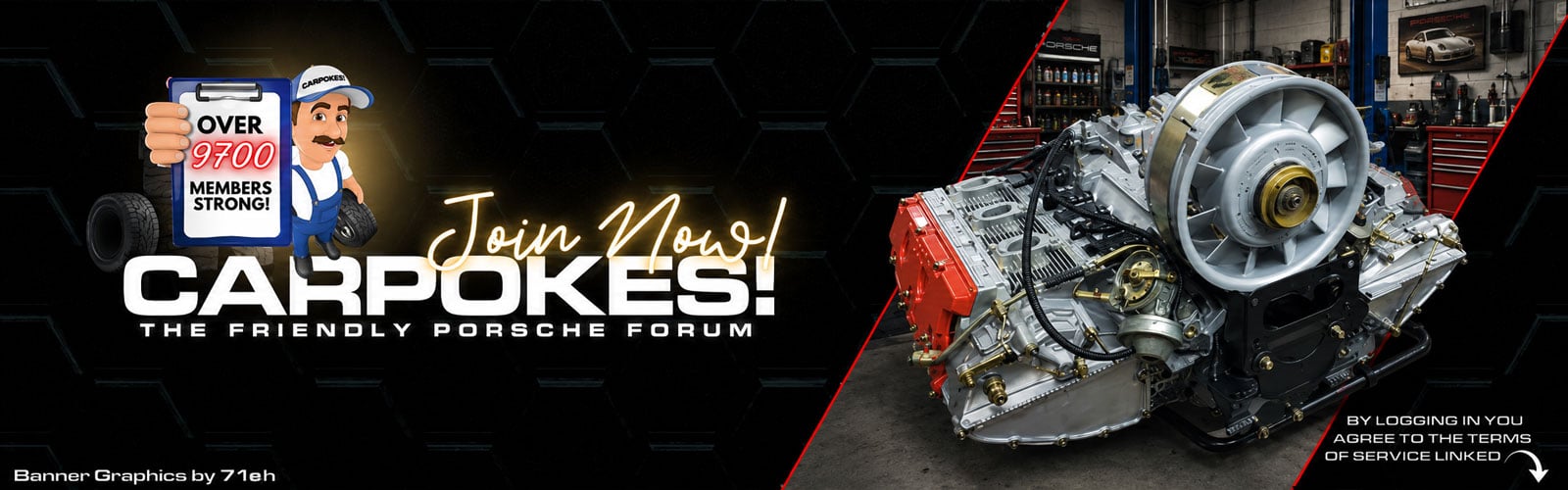

After almost 3 years of chasing down an oil leak — with the help of Carpokes, Pelican, YouTube, and many others — I can finally say the car is back together. After eventually realizing that “everything” was leaking, I ended up replacing over 300 parts, seals, gaskets, nuts, bolts, and washers along the way. Last night I filled it with oil, coolant, and ATF power steering fluid. Today is the big day: fuel goes in, the battery goes back in, and I’ll attempt the first startup! Before I fire it up, I know I still need to:
-pressurize the cooling system
-bleed the power steering system
-prime the turbo/oil system
This definitely won’t be my last question on this forum, but can anyone recommend the best order and practices for handling those processes before first startup?
And seriously, thank you to everyone here who helped me throughout this journey. The knowledge and support from this community has been incredible.
Special thanks to Tom for making all of this possible. I truly couldn’t — and probably wouldn’t — have attempted a project this extensive without your support and guidance along the way.
Almost 3 Years
-
RedMeanzGo
- Posts: 57
- Joined: Sun Oct 08, 2023 8:26 am
- Has thanked: 17 times
- Been thanked: 10 times

Take the plugs out and turn it over on the starter until the oil pressure comes up. Then put the plugs back in and fire it up.
I like the "easy" (but somewhat time-consuming) approach to bleeding the power steering. Get the weight off the front wheels (they don't need to be entirely in the air, but close to it).
Check the fluid level, top-up if necessary, start the car, and run the steering lock-to-lock. Check the fluid again -- if it's foamy then leave it sit overnight.
Repeat until it will go lock-to-lock several times with no foam.
I like the "easy" (but somewhat time-consuming) approach to bleeding the power steering. Get the weight off the front wheels (they don't need to be entirely in the air, but close to it).
Check the fluid level, top-up if necessary, start the car, and run the steering lock-to-lock. Check the fluid again -- if it's foamy then leave it sit overnight.
Repeat until it will go lock-to-lock several times with no foam.
'87 944 NA
'68 Series 2A, '96 E36 M3, '02 Vanquish, '15 Flying Spur
'68 Series 2A, '96 E36 M3, '02 Vanquish, '15 Flying Spur
-
Tom
- Site Admin
- Posts: 9086
- Joined: Fri Jun 25, 2021 2:04 pm
- Location: Silicon Valley, CA
- Has thanked: 952 times
- Been thanked: 4078 times
- Contact:
Spins faster...944m3 wrote: Thu May 28, 2026 10:42 am Congrats.
Instead of taking the plugs out, I think you can accomplish the same thing by just pulling the DME relay. Or is there another reason for pulling the plugs?
-
NCGermerican
- Posts: 303
- Joined: Thu Jan 13, 2022 8:49 am
- Location: Raleigh, NC
- Has thanked: 144 times
- Been thanked: 98 times
If, for some reason you can't build pressure, remove the oil filter. You'll want to have a friend watching while you crank. The SECOND they see oil, stop cranking. You're good.
I could NOT get oil pressure after I reassembled my engine. Once I removed the oil filter, it started building pressure almost immediately. I was thrilled! Then I noticed all the oil on the floor....
I could NOT get oil pressure after I reassembled my engine. Once I removed the oil filter, it started building pressure almost immediately. I was thrilled! Then I noticed all the oil on the floor....
1987 951 - Nautic Blue over Linen
2013 Cayenne GTS Black (Daily)
2023 Durango R/T AWD - Destroyer Grey (Wife's Daily)
2013 Audi A5 Quattro - Brilliant Black (Son's daily)
1987 944 S - Nautic Blue over Linen - sold August 2024
2013 Cayenne GTS Black (Daily)
2023 Durango R/T AWD - Destroyer Grey (Wife's Daily)
2013 Audi A5 Quattro - Brilliant Black (Son's daily)
1987 944 S - Nautic Blue over Linen - sold August 2024
-
Tom
- Site Admin
- Posts: 9086
- Joined: Fri Jun 25, 2021 2:04 pm
- Location: Silicon Valley, CA
- Has thanked: 952 times
- Been thanked: 4078 times
- Contact:
Thanks for the kind words. That's exactly why Carpokes exists.RedMeanzGo wrote: Thu May 28, 2026 7:02 am After almost 3 years of chasing down an oil leak — with the help of Carpokes, Pelican, YouTube, and many others — I can finally say the car is back together. After eventually realizing that “everything” was leaking, I ended up replacing over 300 parts, seals, gaskets, nuts, bolts, and washers along the way. Last night I filled it with oil, coolant, and ATF power steering fluid. Today is the big day: fuel goes in, the battery goes back in, and I’ll attempt the first startup! Before I fire it up, I know I still need to:
-pressurize the cooling system
-bleed the power steering system
-prime the turbo/oil system
This definitely won’t be my last question on this forum, but can anyone recommend the best order and practices for handling those processes before first startup?
And seriously, thank you to everyone here who helped me throughout this journey. The knowledge and support from this community has been incredible.
Special thanks to Tom for making all of this possible. I truly couldn’t — and probably wouldn’t — have attempted a project this extensive without your support and guidance along the way.
 Fingers crossed for the start-up!
Another reason for taking the plugs out is to put a little oil in the cylinders, depending on how dry the cylinder walls might be.
Just a thought on starting up if the fuel system has been apart: it might be worth jumpering the feed to the fuel pump to bring the system up to pressure before trying to start it, just in case of leaks.
Just a thought on starting up if the fuel system has been apart: it might be worth jumpering the feed to the fuel pump to bring the system up to pressure before trying to start it, just in case of leaks.
-
RedMeanzGo
- Posts: 57
- Joined: Sun Oct 08, 2023 8:26 am
- Has thanked: 17 times
- Been thanked: 10 times
Can you please elaborate on "jumpering the feed to the fuel pump" ? Indeed my fuel system has been apart...O875 wrote: Thu May 28, 2026 10:58 pm Another reason for taking the plugs out is to put a little oil in the cylinders, depending on how dry the cylinder walls might be.
Just a thought on starting up if the fuel system has been apart: it might be worth jumpering the feed to the fuel pump to bring the system up to pressure before trying to start it, just in case of leaks.
-
Black944 turbo
- Posts: 219
- Joined: Thu Jul 14, 2022 7:45 am
- Has thanked: 14 times
- Been thanked: 128 times
I would also pull the dme relay along with the plugs. Reason being if the dme relay is installed you will be dumping fuel into the cylinders while cranking. Assuming you will crank it longer than a normal oil change, I wouldn’t want to wash the cylinders down more than necessary with fuel.
-
danmartinic
- Posts: 299
- Joined: Thu Jul 01, 2021 2:11 pm
- Has thanked: 27 times
- Been thanked: 43 times
Make a DME Relay jumper. Fairly simple; follow instructions here:O875 wrote: Thu May 28, 2026 10:58 pm
Can you please elaborate on "jumpering the feed to the fuel pump" ? Indeed my fuel system has been apart...
https://www.clarks-garage.com/shop-manual/fuel-05.htm