Page 1 of 2
Endoscope Turbine Wheel Pics
Posted: Sat Aug 02, 2025 2:49 pm
by Tom
Re: Endoscope Turbine Wheel Pics
Posted: Sat Aug 02, 2025 5:29 pm
by dr bob
Ain't technology grand? I like to grab each of the shaft with a finger, and rock it check on bushing wear. Sometimes even get out a dial indicator to check if I'm doing a diagnosis, a bit more than just a routine look-see. Otherwise yours looks pretty good.
---
TL;DR --
The last real industrial-strength borescope camera I bought was a Sony for peering at gas turbine parts and related compressor blades. Typically for engines you can walk through if the rotor is removed. Traveled in two padded trunks, and includes a very hi-res 17" EGA (!!!) color CRT display, with screenshot capability plus a separate real-camera attachment point to the fiber. A shade under $10k around 1990 with both the 3m and 10m fiber-optic snakes. For practical purposes, your $35 tool does >90% of the work the big one does, plus your business end fits through spark plug holes.
Re: Endoscope Turbine Wheel Pics
Posted: Sun Aug 03, 2025 4:50 pm
by Evan
Glad the borescope saved you the hassle of pulling the turbo looks like your current turbine’s in decent shape. No obvious damage from what I can see. Those cheap cameras are game-changers for diag work. Nice catch.
Re: Endoscope Turbine Wheel Pics
Posted: Sun Aug 03, 2025 5:48 pm
by cda951
I use a borescope at my shop almost every day, sometimes multiple times per day, as it saves a lot of time versus teardown.
The go-to is the Oasis Scientific model linked below, uses a joystick for 180 degree articulation in any direction, which enables good in-cylinder views when dropped in via the spark plug hole. It's very handy when used for examining the dreaded bore-scoring of Porsche M96/M97 engines, whether from the top/spark plug side or the bottom/oil sump side.
Can also use the articulation to look "up" and examine the cylinder head side of the combustion chamber, can see burned valves/seats (turn engine over by hand until the suspected valve is hanging open) as well as excessive carbon buildup on the backsides of intake valves of gasoline direct injection engines.
I also use it for checking clogged intake and EGR passages on modern diesel engines, inside door panels, under dashboards, any place where it is tight and a lot of disassembly would otherwise be required to discover an issue.
A cheap "burner" Amazon borescope or two is a great backup, as these cameras do not last long in high temperatures----we only use the fancier articulating model on a cold engine, it has a built-in temperature display, do not let it get much higher than 45 degrees C! Use the burner if you want to see coolant leakage inside a cylinder which may only occur with a warm engine, etc.
EDIT: DO NOT use the cheapo mirror "attachments" for the Amazon-type borescopes for in-cylinder work unless you are quite brave and 100% sure it will not come off inside the cylinder! That would make for a bad day . . . .
https://www.oasisscientific.com/collect ... id-devices
Re: Endoscope Turbine Wheel Pics
Posted: Sun Aug 03, 2025 6:33 pm
by Tom
cda951 wrote: Sun Aug 03, 2025 5:48 pm
I use a borescope at my shop almost every day, sometimes multiple times per day, as it saves a lot of time versus teardown.
The go-to is the Oasis Scientific model linked below, uses a joystick for 180 degree articulation in any direction, which enables good in-cylinder views when dropped in via the spark plug hole. It's very handy when used for examining the dreaded bore-scoring of Porsche M96/M97 engines, whether from the top/spark plug side or the bottom/oil sump side.
Can also use the articulation to look "up" and examine the cylinder head side of the combustion chamber, can see burned valves/seats (turn engine over by hand until the suspected valve is hanging open) as well as excessive carbon buildup on the backsides of intake valves of gasoline direct injection engines.
I also use it for checking clogged intake and EGR passages on modern diesel engines, inside door panels, under dashboards, any place where it is tight and a lot of disassembly would otherwise be required to discover an issue.
A cheap "burner" Amazon borescope or two is a great backup, as these cameras do not last long in high temperatures----we only use the fancier articulating model on a cold engine, it has a built-in temperature display, do not let it get much higher than 45 degrees C! Use the burner if you want to see coolant leakage inside a cylinder which may only occur with a warm engine, etc.
EDIT: DO NOT use the cheapo mirror "attachments" for the Amazon-type borescopes for in-cylinder work unless you are quite brave and 100% sure it will not come off inside the cylinder! That would make for a bad day . . . .
https://www.oasisscientific.com/collect ... id-devices
How funny, while I was jockeying the stalk part around trying to get a good shot of the turbine, I was thinking there should be some way to aim the camera. I was thinking something mechanical, but that Oasis joystick looks fantastic. It's now top of the list for next time I'm in need of tool shopping therapy. Thank you for the heads-up, very much appreciate it, even though it probably just cost me $500.

Re: Endoscope Turbine Wheel Pics
Posted: Mon Aug 04, 2025 12:49 pm
by Tom
Well, since the cat pipe was disconnected already and the turbine looked good, I decided to put the 3" exhaust back on to see if the DEC CARB-approved cat was the cause of my lazy spooling. It was. Night and day difference without that cat on that car. I'm not sure they even make these anymore, but the DEC cat a nice drop-in replacement for the stock converter with all the pipes from the downpipe to the muffler. It's passed smog with low numbers 3 times in a row now, but it clearly doesn't flow very well. The cat itself is less than half the size of the factory cat, and the inlet looks suspiciously small -- like they used a CARB-approved cat with a 2" inlet. Either way, it's clearly creating a lot of flow restriction and was causing the turbo to spool slowly. I'm mulling the idea of building my own 2.5" cat pipe with CARB-approved cat that flows as well (hopefully better) than the stock cat. I was hoping the DEC cat would be 'good enough' for my new detuned, street-legal low 300hp configuration, but now I'm doubting it's 'good enough' for a stock 951, at least from a performance perspective...
Re: Endoscope Turbine Wheel Pics
Posted: Mon Aug 04, 2025 2:31 pm
by ROB III
@Tom , @cda951 @dr bob, and @Evan
Thank you for the discussion and sharing of experiences. I've often wondered about those particularly when I helped a couple friends at several SCCA events. The Oasis Scientific sounds like the way to go! Much thanks for the link!
Re: Endoscope Turbine Wheel Pics
Posted: Mon Aug 04, 2025 9:01 pm
by dr bob
Tom wrote: Mon Aug 04, 2025 12:49 pm
Well, since the cat pipe was disconnected already and the turbine looked good, I decided to put the 3" exhaust back on to see if the DEC CARB-approved cat was the cause of my lazy spooling. It was. Night and day difference without that cat on that car. I'm not sure they even make these anymore, but the DEC cat a nice drop-in replacement for the stock converter with all the pipes from the downpipe to the muffler. It's passed smog with low numbers 3 times in a row now, but it clearly doesn't flow very well. The cat itself is less than half the size of the factory cat, and the inlet looks suspiciously small -- like they used a CARB-approved cat with a 2" inlet. Either way, it's clearly creating a lot of flow restriction and was causing the turbo to spool slowly. I'm mulling the idea of building my own 2.5" cat pipe with CARB-approved cat that flows as well (hopefully better) than the stock cat. I was hoping the DEC cat would be 'good enough' for my new detuned, street-legal low 300hp configuration, but now I'm doubting it's 'good enough' for a stock 951, at least from a performance perspective...
Tom, I've managed to melt the ceramic honeycomb substrate in a couple turbo-car cats over the years. Send the end of your inspection camera into the front of the old catalyst for a look. I was driving a 9.5:1 CIS (KE-Jetronic) turbo car without knock sensing, and ran it a bit rich to help manage combustion temps under, um, excessive boost conditions. The ceramic protested by melting and slowly pinching exhaust flow, kind of self-protecting. A higher-flow cat didn't help except it took a little longer to choke the flow. Ended up just bypassing the cat under high boost conditions, which let it pass cali smog with flying colors.
TL;DR --
The partial cat bypass was one I'd designed for prancing-horse cars with similar choked-flow issues under load. CARB got wise to it and finally banned it after a couple years. By then we'd moved the cars on to Motronic management (rebadged as Marelli...) and solved most of their pass-or-perform cat survival struggles in the late 70's - early 80's cars. Their Cali headquarters was an easy bike ride from my home at the time in Cypress. That was my first hands-on intro to the 928, which they had as a 'how did -they- do it?' mule. Fun times it seemed then, managing three parallel gigs plus school and a weekend race habit. Immortal at the time too it seemed.
Re: Endoscope Turbine Wheel Pics
Posted: Tue Aug 05, 2025 11:53 am
by Tom
dr bob wrote: Mon Aug 04, 2025 9:01 pm
Tom, I've managed to melt the ceramic honeycomb substrate in a couple turbo-car cats over the years. Send the end of your inspection camera into the front of the old catalyst for a look. I was driving a 9.5:1 CIS (KE-Jetronic) turbo car without knock sensing, and ran it a bit rich to help manage combustion temps under, um, excessive boost conditions. The ceramic protested by melting and slowly pinching exhaust flow, kind of self-protecting. A higher-flow cat didn't help except it took a little longer to choke the flow. Ended up just bypassing the cat under high boost conditions, which let it pass cali smog with flying colors.
TL;DR --
The partial cat bypass was one I'd designed for prancing-horse cars with similar choked-flow issues under load. CARB got wise to it and finally banned it after a couple years. By then we'd moved the cars on to Motronic management (rebadged as Marelli...) and solved most of their pass-or-perform cat survival struggles in the late 70's - early 80's cars. Their Cali headquarters was an easy bike ride from my home at the time in Cypress. That was my first hands-on intro to the 928, which they had as a 'how did -they- do it?' mule. Fun times it seemed then, managing three parallel gigs plus school and a weekend race habit. Immortal at the time too it seemed.
Good idea

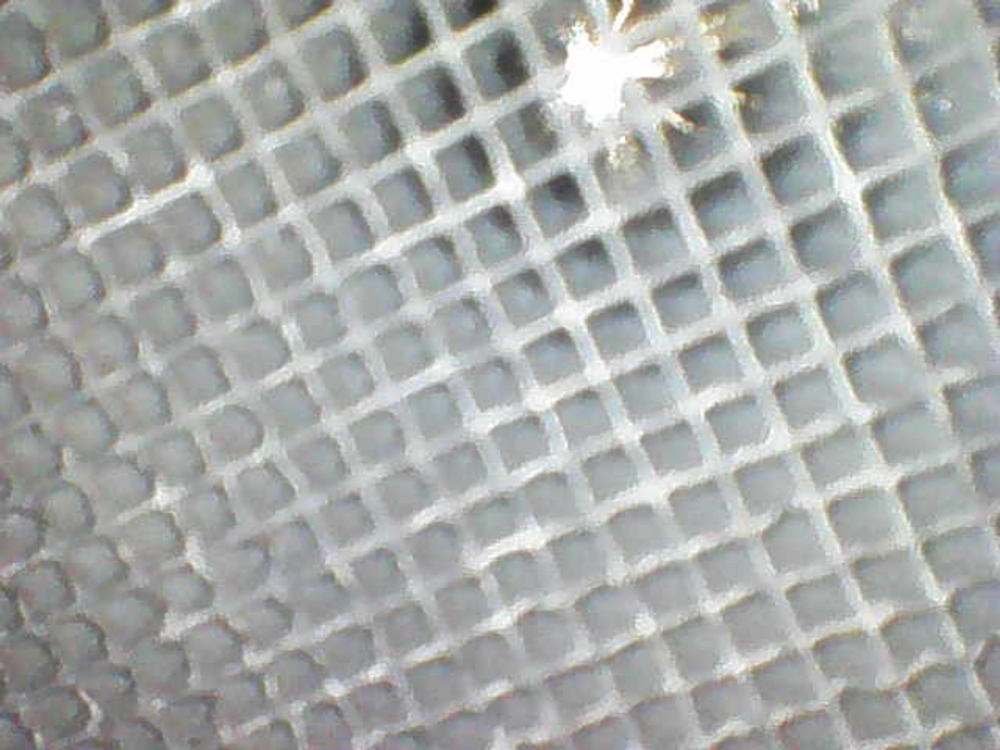
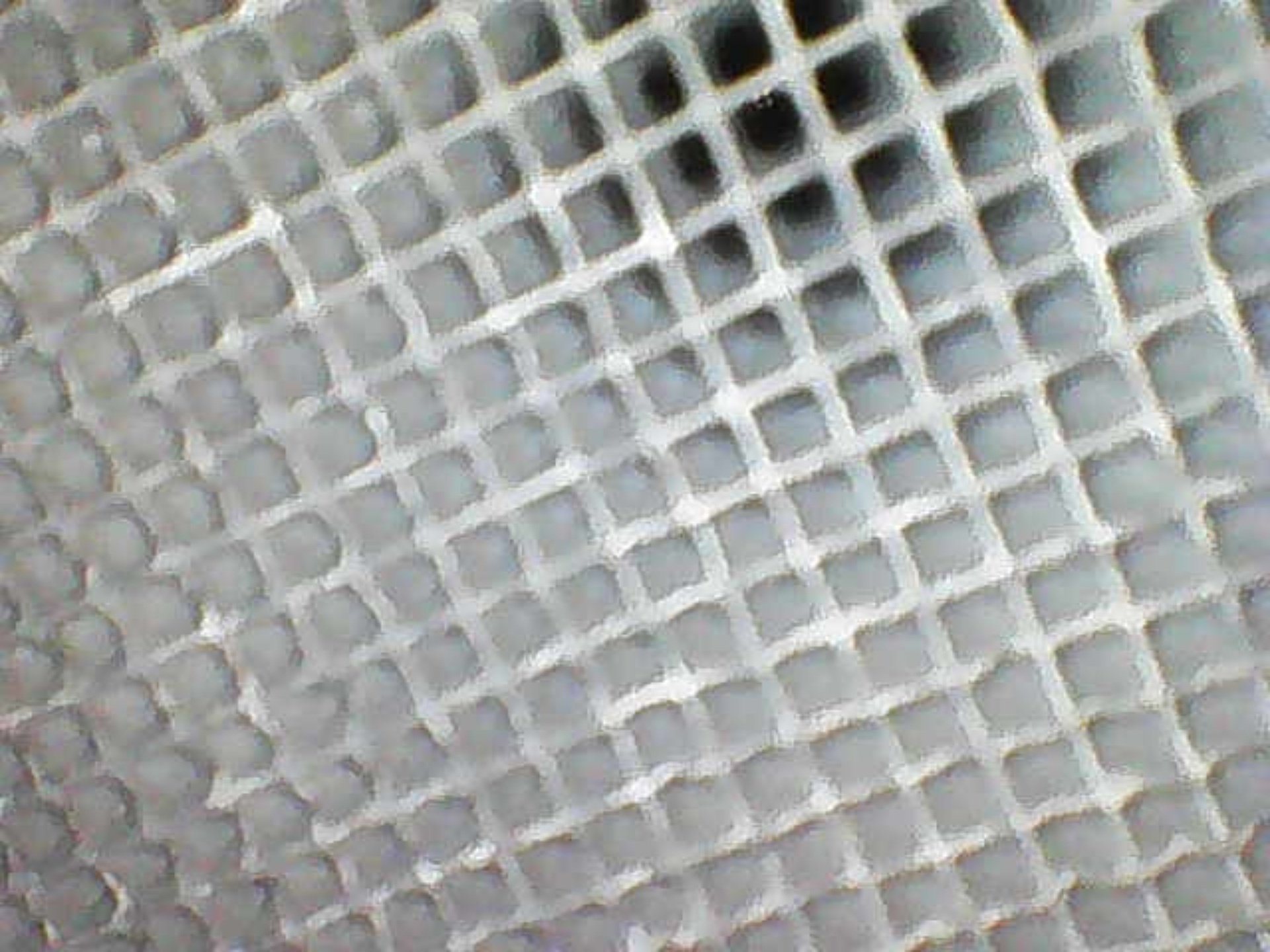
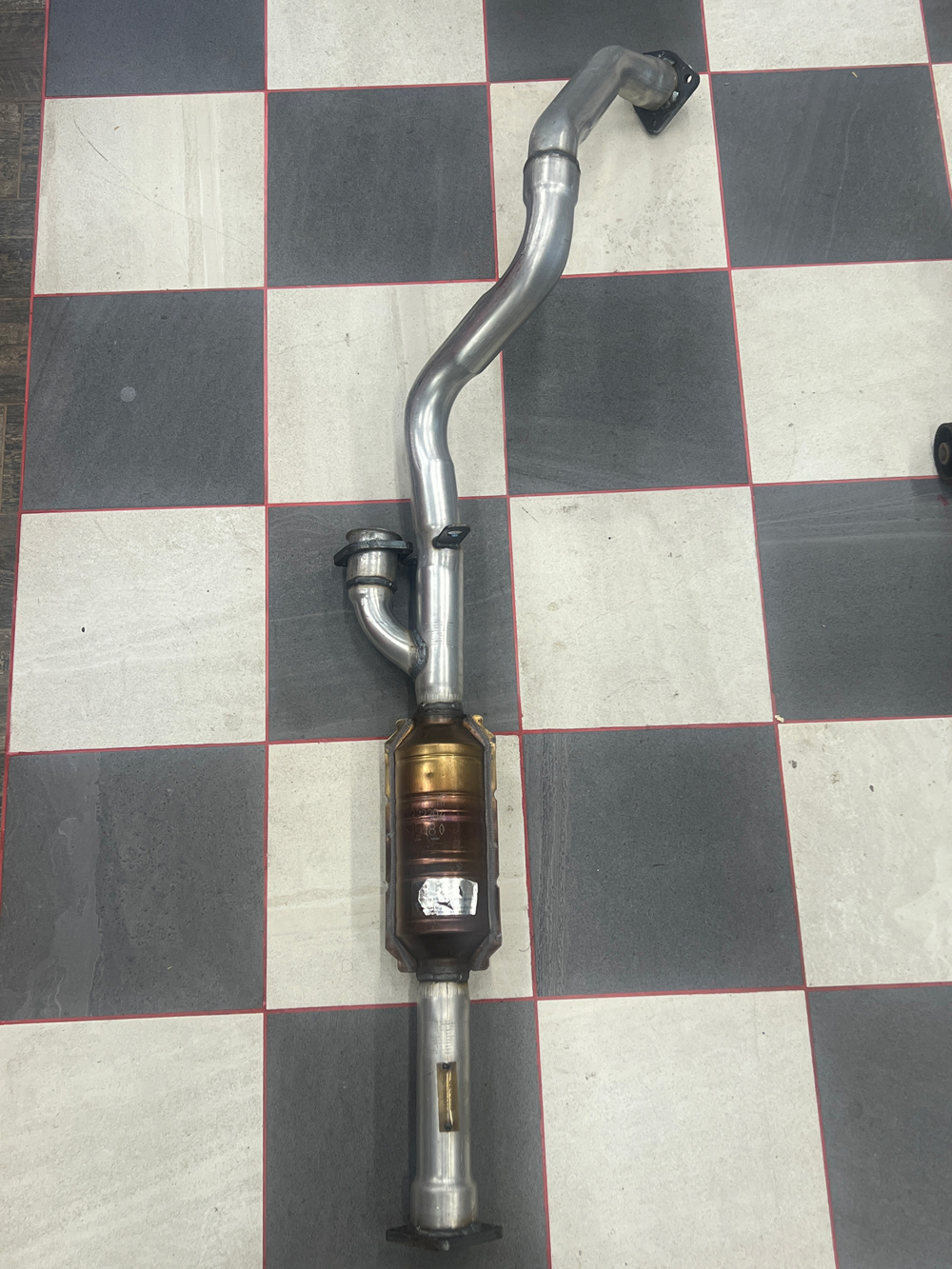
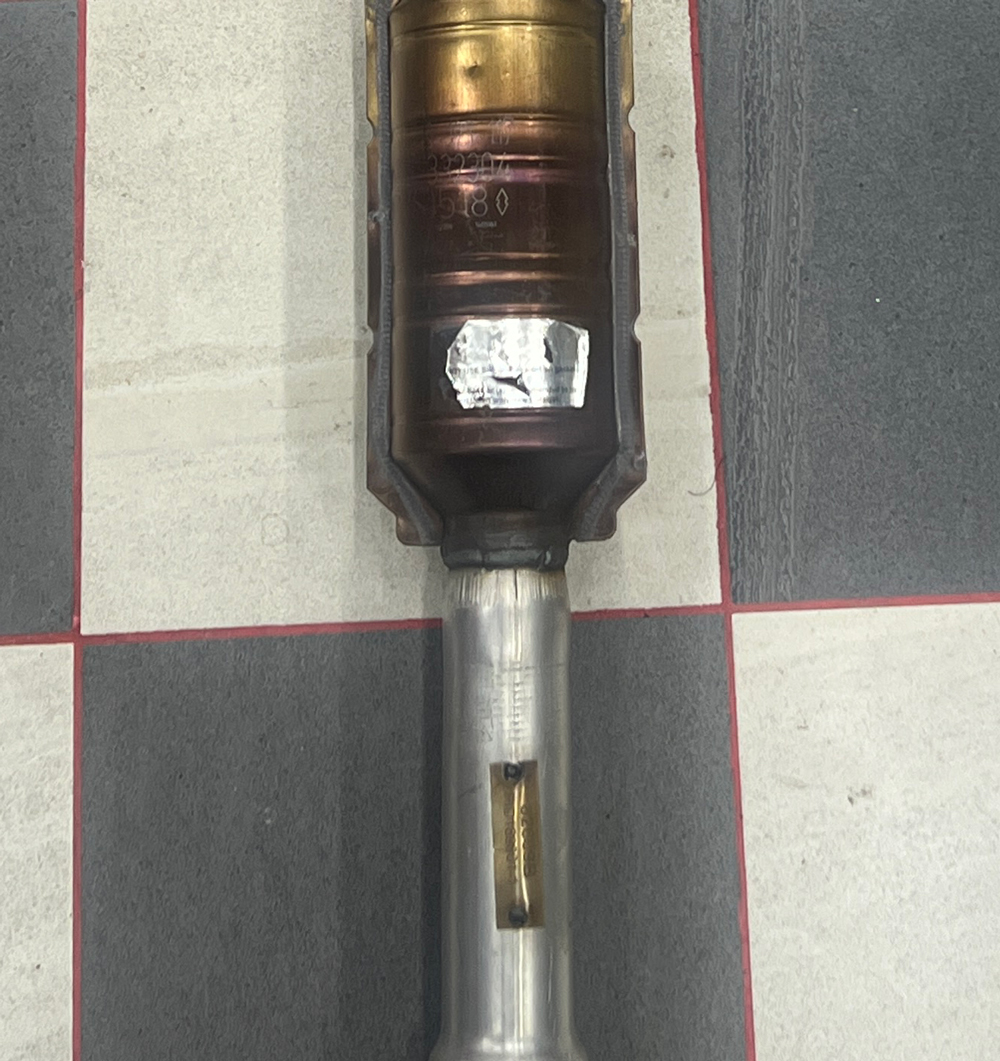
Since the pipe is sitting on the garage floor, I took a look-see and at least it doesn't look melted. These are shots from the inlet side. Seem ok? I looked again at the various non-mandrel bends and where the pipe connects to the converter, and it sure looks to me like they necked down a 2.5" pipe to fit a 2 or 2.25" catalytic converter, not to mention various bends that clearly reduce the cross-sectional flow area. I'll have to look up the cat's carb number and see if I can figure out what it really is. It does a great job passing smog, and it might be ok-enough for bone stock 944 Turbo, but it's a very clear restriction on my motor... Worth noting that the wastegate pipe ties in behind the main cat on the factory version, with a bigger pipe and a tiny cat of its own -- nearly doubling the cross-sectional flow area when the wastegate is open. The DEC aftermarket has a smaller wastegate pipe and plumbs it into the same (already too small) cat as the main exhaust. It's a very efficient smog cork.

- honeycomb1.jpg (362.56 KiB) Viewed 662 times
Flashlight at muffler end...
- honeycomb3.jpg (472.28 KiB) Viewed 662 times

- honeycomb2.jpg (310.08 KiB) Viewed 662 times
- dec-cat.jpg (840.33 KiB) Viewed 662 times
- 2-inch-pipe.jpg (588.57 KiB) Viewed 662 times
Re: Endoscope Turbine Wheel Pics
Posted: Wed Aug 06, 2025 2:53 pm
by dr bob
That's a pretty small converter OD for 500HP duty. There's some compromise of flow with the small honeycomb/grid cavities. I'll speculate that there's less than 20% available flow per square inch vs no grid. Bigger is better, with the improvement multiplied by the turbine. Is there room under the car for a larger catalyst shell?
I'd also find a way to laser-etch the correct CARB certification label onto the shell I'd end up using to get things working correctly. A larger shell with more cells actually slows flow velocity and therefore increasing residence time, so the catalyst function actually improves. How savvy is your smog-check person?